
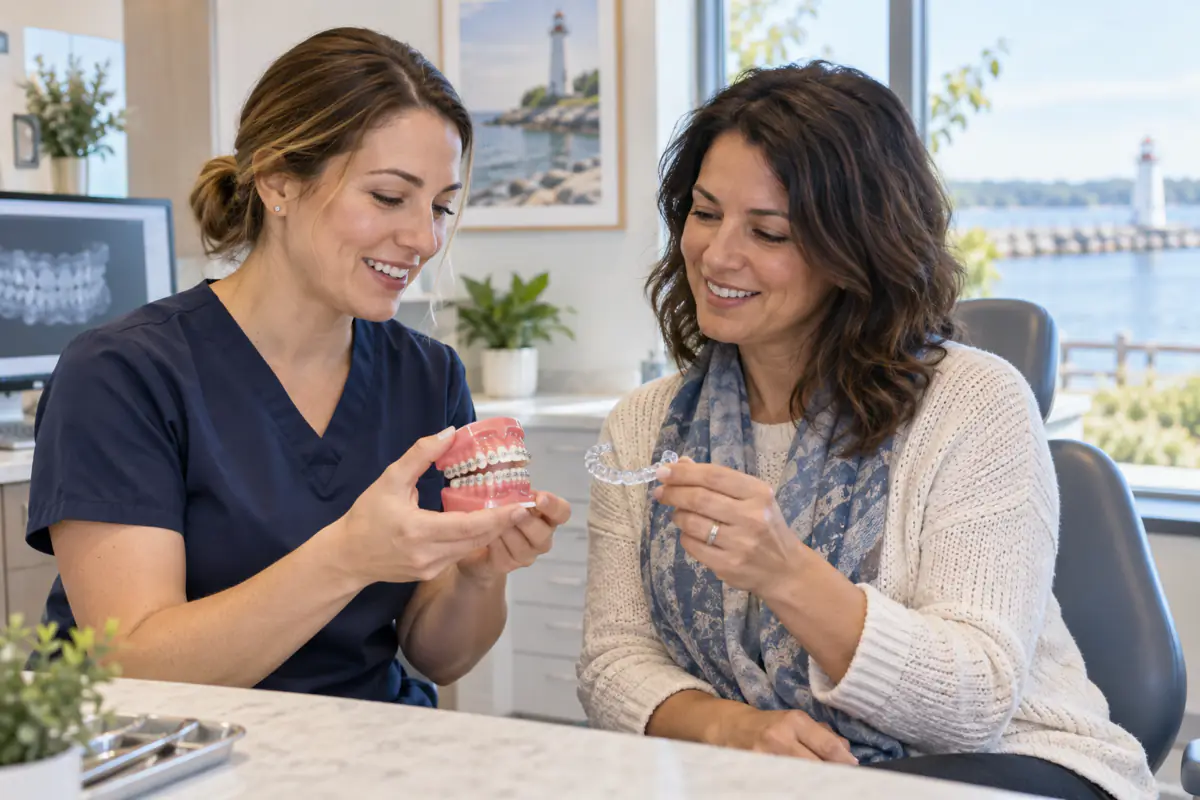
Interest in adult braces in Port Dover may begin with crowded front teeth, a changing bite or a space that has bothered you for years. Orthodontics can improve alignment, function and access for cleaning, but adult treatment needs careful planning around gum support, restorations, missing teeth and long-term retention.
Age alone does not decide candidacy. Healthy teeth can move at many stages of life. The more important questions are whether the supporting tissues are stable and which appliance can deliver the required movements safely and predictably.
Why adults pursue orthodontic treatment
Some adults did not have treatment when younger. Others notice teeth shifting after losing a retainer, dental work, gum changes or years of natural movement. Common goals include:
- aligning crowded or rotated teeth;
- closing or redistributing spaces;
- improving an overbite, open bite or crossbite;
- preparing room for an implant or bridge;
- uprighting a tilted tooth;
- making daily cleaning easier; or
- improving smile proportions.
Straight appearance and a healthy bite are related but not identical. Perfectly level front teeth can still meet poorly, and a functional improvement may not create absolute symmetry. A consultation should define priorities and realistic limits.
There is no standard upper age limit
The American Association of Orthodontists’ adult treatment guidance explains that adults can benefit from orthodontics and that treatment planning considers oral health and individual needs. Tooth movement depends on living bone and periodontal tissues, not on being a teenager.
Adults are more likely to have crowns, fillings, implants, missing teeth, gum recession or previous bone loss. These do not automatically prevent treatment, but they affect force levels, sequence and coordination. General health and medicines also matter because some conditions or therapies influence bone and healing.
Fixed braces versus clear aligners
Fixed braces use brackets bonded to teeth and wires that guide movement. They remain in place throughout active treatment. The AAO’s overview of braces describes how brackets, wires and sometimes elastics apply controlled forces.
Clear aligners are removable trays worn in a planned sequence. They are discreet and come out for meals and cleaning. They only work while worn, and attachments or elastics may still be visible. Our guide to Invisalign in Port Dover explains aligner routines and limitations.
Neither method is automatically better or faster. Fixed appliances can provide strong control for certain rotations, root movements and bite corrections. Aligners may fit work or social preferences and simplify brushing, but consistent wear is essential. Complex cases can use a combination or require referral to an orthodontist.
Health comes before movement
Active cavities and gum inflammation should be treated before braces begin. Orthodontic appliances create more plaque-retentive surfaces, so starting with bleeding gums or uncontrolled decay raises avoidable risk.
An examination may include dental X-rays, periodontal measurements and tests for suspicious teeth. Existing fillings and crowns are checked for stability. Wisdom teeth are not removed automatically; their position, symptoms and effect on the plan determine whether treatment is advised.
If periodontal disease has caused bone loss, movement may still be possible after stabilization, often with closer monitoring and modified force. An orthodontist, general dentist and periodontist may coordinate care.
Records and treatment planning
Diagnostic records commonly include facial and dental photographs, digital scans or impressions and appropriate X-rays. These show tooth position, root shape, jaw relationships and available bone. A three-dimensional scan is not necessary for every case and should be used when its information will affect care.
The plan specifies which teeth will move, whether space is created or closed and how the bite should finish. Some adults benefit from minor enamel reshaping between selected teeth. Others may need an extraction, expansion, jaw surgery or restorative changes. Each choice has biological and aesthetic tradeoffs.
A digital simulation is a planning and communication aid, not a guarantee that biology will follow the animation exactly.
Existing crowns, bridges and implants
Teeth with sound crowns can often be moved, although bonding brackets may require different techniques. Root-canal-treated teeth may also move when they are healthy and adequately restored. They still need monitoring.
Dental implants do not move through bone like natural teeth. An existing implant can sometimes serve as anchorage, but its fixed position may limit alignment. When replacing a missing tooth, orthodontics is often completed first so the future implant can be placed in the correct space.
Conventional bridges connect teeth and can prevent independent movement unless they are modified or replaced. This is why restorative and orthodontic planning should happen together before irreversible work begins.
How long adult treatment takes
There is no honest universal timeline. Limited alignment can take months, while comprehensive bite correction may take considerably longer. Complexity, gum and bone health, biological response, missed visits, broken appliances and aligner or elastic wear all influence duration.
Adults may have denser bone or more restorative constraints, but age by itself does not set the schedule. Moving teeth faster than tissues can adapt is not a shortcut. Ask what milestones will be assessed and what factors could extend the estimate.
What discomfort feels like
Pressure and tenderness are common after braces are placed, wires are adjusted or a new aligner is started. The sensation usually peaks early and settles over several days. Soft foods, cool water and orthodontic wax can help.
A sharp wire, loose bracket or rough aligner edge creates a different problem. Contact the dental or orthodontic office for instructions rather than clipping or reshaping an appliance unless specifically directed. Severe pain, facial swelling, trauma, a swallowed or inhaled component, or signs of infection need prompt advice.
Over-the-counter pain medicine may be appropriate for some adults, but health conditions, pregnancy, allergies, blood thinners and other medicines affect safe choices. Follow label directions and ask a pharmacist or clinician when uncertain.
Cleaning with fixed braces
Brackets do not cause cavities by themselves; plaque left around them can. White, chalky areas near brackets are early mineral loss and may remain visible after appliances are removed.
Brush above, below and directly around each bracket twice daily with fluoride toothpaste. An interdental brush can clean under wires, and floss threaders or orthodontic floss help clean between teeth. A water flosser can be a useful addition but may not replace mechanical plaque removal everywhere.
Inspect teeth in good light. Bleeding is usually a sign that the gumline needs more effective gentle cleaning, not that brushing should stop. Professional cleanings may be scheduled more frequently according to risk. Our detailed routine for braces oral hygiene in Simcoe applies equally to adults travelling from Port Dover.
Eating with braces
Avoid biting directly into hard foods that can bend wires or release brackets. Cut raw carrots, apples and crusty bread into smaller pieces. Skip ice chewing, hard candy and popcorn kernels. Sticky candy can pull on appliances and prolong sugar contact.
Most nutritious foods remain available with preparation. Chew carefully, especially after adjustments. Aligners should generally be removed for anything other than plain water, then teeth should be cleaned before trays return. Hot liquid can distort some plastics.
Frequent sweet drinks raise cavity risk whether treatment uses braces or aligners. Water is the simplest drink between meals.
Appointments, elastics and cooperation
Regular visits let the clinician change wires or trays, evaluate movement and check tissue health. Missed appointments can allow an appliance to remain inactive or apply force in an unintended way.
Elastics are prescribed for specific bite correction. Wearing more than directed does not accelerate treatment safely; it can move teeth incorrectly or overload tissues. Wear aligners and elastics exactly as instructed and report repeated breakage, since it can signal a bite or habit issue.
Continue routine general dental examinations during orthodontic treatment. Orthodontic visits focus on movement and do not replace cavity screening, gum care or other preventive services.
Risks and limitations
Orthodontic treatment is generally predictable, but it is not risk-free. Possible concerns include cavities, enamel marks, gum inflammation, recession, loss of periodontal support, root shortening, pulp changes, temporary jaw discomfort and relapse.
Root shortening is usually minor but can be more significant in susceptible teeth. Risk relates to root shape, previous trauma, movement type, force and treatment duration. Appropriate imaging and monitoring help guide adjustments.
Moving teeth cannot change every jaw imbalance. Significant skeletal discrepancies may require accepting a compromise or considering jaw surgery. Braces also cannot make mismatched tooth sizes identical; bonding or reshaping may be discussed after alignment.
Gum recession deserves special attention
Crowded teeth may sit partly outside ideal bone contours. Moving them can improve position, but expanding too far may increase recession risk in thin tissue. Existing recession, aggressive brushing, smoking and inflammation add concern.
The plan should consider gum thickness, bone support and the direction of movement. Periodontal consultation or grafting may be recommended before, during or after orthodontics in selected cases. A cosmetic promise should never outweigh tissue health.
Retainers are part of treatment
Teeth tend to shift after appliances are removed, and natural movement continues throughout life. Retainers hold the result while tissues reorganize and then provide long-term stability. They may be removable, fixed behind teeth or a combination.
Wear instructions usually change over time, but many people need some form of retention indefinitely. Fixed retainers require careful cleaning and periodic checks for loose bonding. Removable retainers need routine cleaning and replacement when worn, cracked or distorted.
If a retainer stops fitting, do not force it over substantially shifted teeth. Contact the office. Our retainer care in Port Dover guide covers cleaning, storage and warning signs.
Cost and insurance questions
Orthodontic fees depend on complexity, estimated duration, appliance type and what is included. Ask whether records, retainers, refinement trays, repairs and follow-up are part of the estimate. Treatment that involves periodontal, surgical or restorative care may have separate fees.
Dental benefits vary. An adult orthodontic maximum, waiting period or age restriction may apply. Obtain a written estimate and confirm coverage with the insurer. Benefits are a financial arrangement, not a clinical opinion about which appliance is suitable.
Preparing for an adult orthodontic consultation
Bring your goals, medical history and medicine list. Mention previous gum treatment, jaw symptoms, dental trauma and any anticipated crowns or implants. Useful questions include:
- What problem is treatment intended to solve?
- Which movements are difficult in my case?
- Why are braces, aligners or referral recommended?
- What must be treated before movement begins?
- How will gum and root health be monitored?
- What cooperation will be required?
- What retention is expected afterward?
Ask to hear the alternatives, including limited treatment or no treatment, and how each affects function and appearance.
Starting adult braces in Port Dover
The right plan balances the smile you want with periodontal support, bite, maintenance and future restorative care. Fixed braces may offer the control a complex case needs; aligners may suit another person’s movements and routine. A thorough diagnosis makes that distinction clearer than marketing does.
Port Dover Family Dentistry can assess your oral health, discuss adult braces in Port Dover and coordinate orthodontic referral or ongoing preventive care where appropriate. Call 519-583-2929 or request an appointment.
This article provides general education. Orthodontic candidacy, risks and timing require an individualized examination and records.
About the author
Port Dover Family Dentistry Team
Our team provides family-focused dental care in Port Dover, Ontario. We create practical oral-health education to help patients ask informed questions and feel more confident about care. This article is general information and does not replace an examination or personalized diagnosis.