Gums & Plaque
Gingivitis, periodontitis and plaque-retentive areas can create persistent odour or a bad taste.
Port Dover Family Dentistry
Bad breath treatment in Port Dover identifies oral causes such as plaque, gum disease, dry mouth or dentures and creates a practical management plan.
Let’s get you smiling
Tell us how we can help. Our team will follow up to confirm a time.
Bad breath treatment in Port Dover
Persistent bad breath, also called halitosis, is common and should be discussed without embarrassment. It often begins in the mouth, where bacterial coating, gum disease, food debris, dry mouth, cavities or unclean dentures can contribute.
Mints and cosmetic rinses may mask odour briefly without treating the source. A dental assessment looks for oral causes and identifies when medical evaluation may be appropriate for sinus, reflux, metabolic or other non-dental factors.

A respectful assessment
Bad breath is a health concern—not a character flaw. We focus on objective findings and practical changes without judgment.
Looking beyond the symptom
Halitosis can have more than one contributor. A systematic review of the mouth helps separate temporary odour from a concern that needs treatment or medical follow-up.
Gingivitis, periodontitis and plaque-retentive areas can create persistent odour or a bad taste.
Low saliva from medication, mouth breathing or health conditions can reduce natural cleansing.
Decay, trapped food, a failing restoration or infection may contribute to odour.
Removable dental work can retain plaque and odour when fit, storage or cleaning needs attention.
From concern to a practical plan
The conversation and examination are private, matter-of-fact and focused on patterns that can help identify the source.
We ask when the problem occurs and about diet, tobacco, medications, dry mouth, reflux, sinus symptoms and home care.
The teeth, gums, tongue, saliva, restorations and appliances are checked for potential oral sources.
The plan may include hygiene care, gum or cavity treatment, dry-mouth support or home-care changes. Persistent non-dental causes are referred appropriately.
An oral examination matters
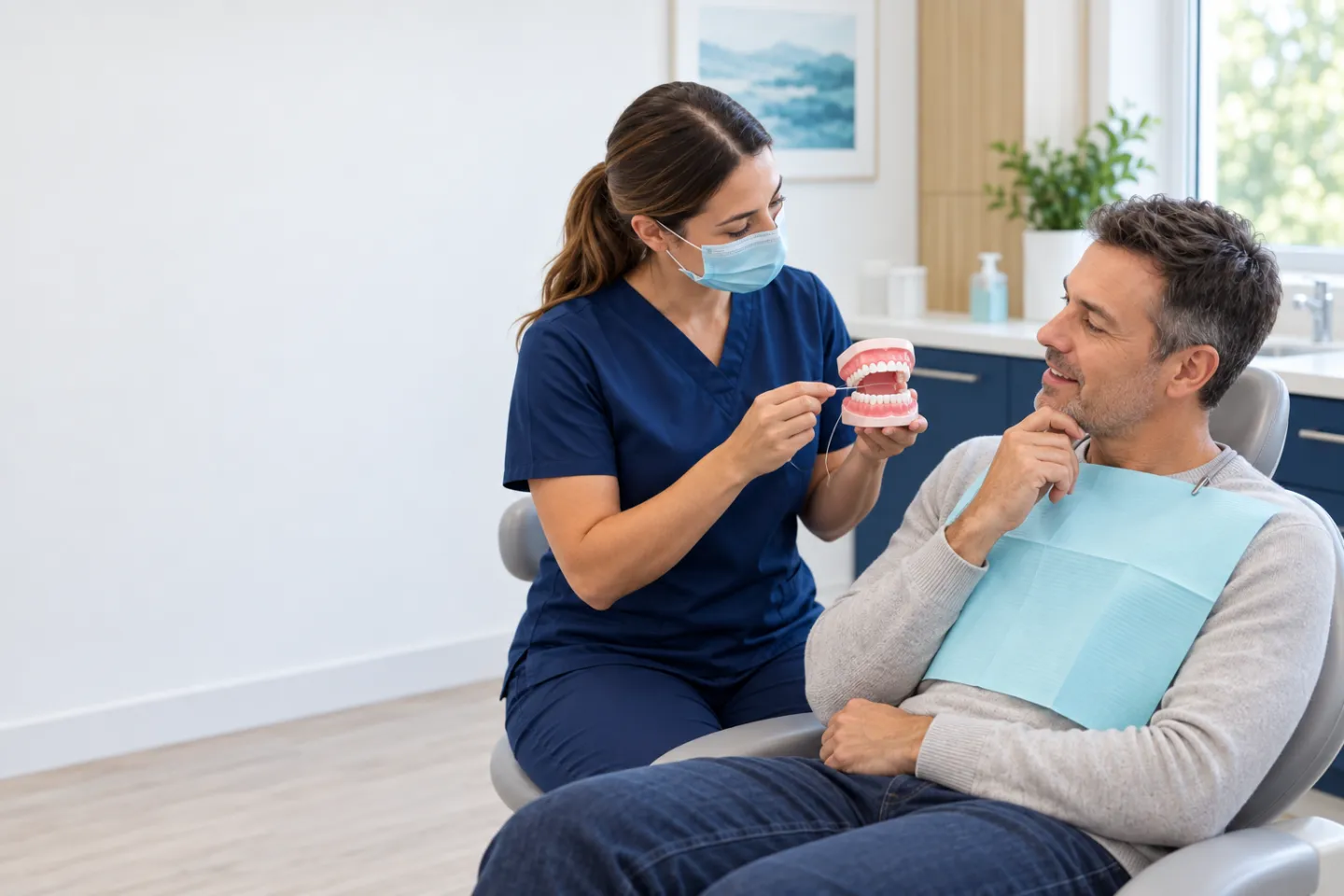
A dental examination looks for plaque, tongue coating, inflamed gums, decay, infection, food traps, reduced saliva and appliances that are difficult to keep clean. These findings guide treatment more reliably than trying one rinse after another.
If the mouth appears healthy but the concern continues, information about timing and other symptoms can help determine whether your family physician or another healthcare professional should investigate a non-dental cause.

Bacteria and retained debris can produce odour-causing compounds, particularly in areas that are difficult to clean.
Bleeding, swelling, deep gum pockets, decay or an abscess require diagnosis and appropriate dental treatment.
Dry mouth can allow bacteria and debris to remain longer and may also increase cavity and infection risk.
When to request an assessment
Temporary morning breath or odour after particular foods is common. A persistent or unexplained change deserves closer attention, especially when other symptoms are present.
Odour that continues despite regular brushing, interdental cleaning and hydration may have an oral or medical contributor.
Bleeding, tenderness, recession or a persistent bad taste can accompany gum inflammation or infection.
Thick saliva, frequent thirst, burning or difficulty swallowing may point toward reduced saliva and a different prevention plan.
Tooth pain, facial swelling, fever or feeling unwell can signal an urgent dental infection and should not wait for a routine visit.
Breath odour can come from outside the mouth. A dental examination cannot diagnose sinus, reflux, respiratory or metabolic conditions, but it can help determine when medical assessment is appropriate.
Everyday breath care
Home care can reduce oral contributors, but persistent halitosis still needs diagnosis rather than repeated masking.
Brush twice daily with fluoride toothpaste and clean between teeth every day to disrupt plaque where a toothbrush cannot reach.
Clean removable dentures as directed, and follow individualized guidance for gentle tongue cleaning without injuring the tissues.
Stay hydrated. Avoid tobacco and do not rely on alcohol-containing products if they worsen dryness.
Seek care for persistent bad breath, gum bleeding, pain, swelling or a lasting bad taste.
Judgment-free dental care
We can look for oral causes, recommend practical treatment and guide you toward medical care when needed.
Bad breath questions
Many cases begin in the mouth with bacterial plaque, gum disease, food debris, tongue coating, dry mouth, decay or appliances. An exam can identify likely contributors.
Some therapeutic rinses help with particular oral conditions, while cosmetic rinses mainly mask odour temporarily. Mouthwash does not replace brushing, interdental cleaning or treatment of disease.
Yes. Saliva helps wash away debris and control oral bacteria. Reduced saliva can increase odour as well as cavity and infection risk.
Your dentist may recommend assessment by a physician for possible sinus, reflux, medication-related, metabolic or other medical contributors.
Gentle tongue cleaning may make the mouth feel fresher for some people, but it is not a proven cure for chronic halitosis. Focus first on complete oral hygiene and diagnosis.
Recognized year after year
Best Dentists in Norfolk
Proudly recognized among Norfolk’s top-rated dental practices for six consecutive years.

2021 Winner

2022 Winner

2023 Winner

2024 Winner

2025 Winner

2026 Winner
Stories from our patients
Watch a patient’s experience and browse more five-star reviews from people who have visited our Port Dover dental clinic.
Patient video
A patient shares the welcoming atmosphere and positive experience they found at our Port Dover office.
Google reviews
Swipe or use the arrows
Read all reviewsOur community
Your next visit can start today
New patients and CDCP patients are welcome. Tell us how we can help and our Port Dover dental team will follow up with you.
Evening appointments Monday and Tuesday