
Patient video
Welcoming and Wonderful Practice
A patient shares the welcoming atmosphere and positive experience they found at our Port Dover office.
★★★★★

Port Dover Family Dentistry
Coming from Glen Meyer with mobility, hearing, vision or seating needs? Learn what to share before booking so a Port Dover visit can be arranged realistically.
Let’s get you smiling
Tell us how we can help. Our team will follow up to confirm a time.
Seeing patients from Glen Meyer and the surrounding countryside at our Port Dover office
Browse all dental services for Glen MeyerAccess starts with details
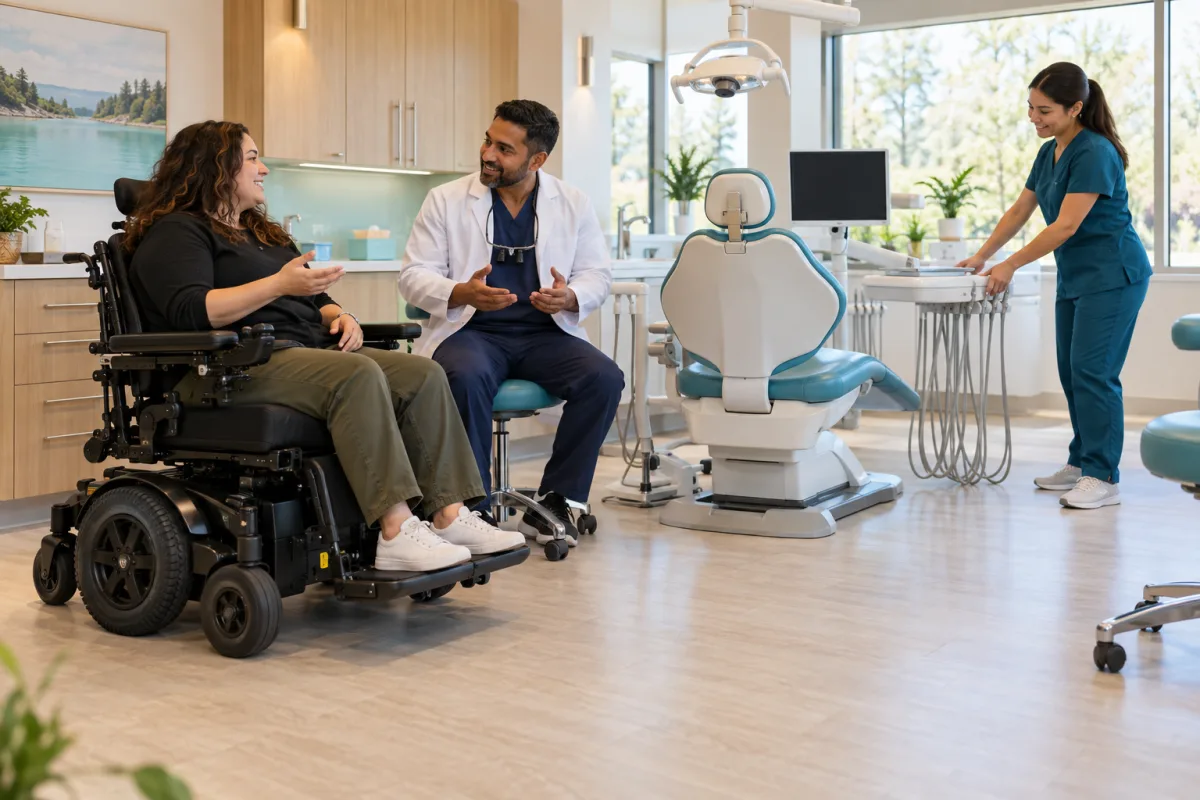
Getting into a dental chair, hearing instructions clearly or managing a long wait can all shape whether an appointment feels manageable. Accessible care means talking through those practical barriers early, so the visit is planned around how you actually move, communicate and rest rather than around a standard booking.
For people travelling from the rural roads around Glen Meyer, a wasted trip is a real cost. Our Port Dover office can talk with you beforehand about entry, seating, appointment length and support people, and explain honestly what can and cannot be arranged at the practice.
Describe your needs
Let the team know whether you use a wheelchair, walker or cane, whether you can transfer to a dental chair on your own and which positions become uncomfortable. Mention breathing, neck or back limits that make lying back difficult. Concrete details like these help staff think through the room, the chair and the time needed, instead of trying to work it out on the day.
If you lip-read, use a hearing aid, have low vision or prefer written instructions, say so when booking. Some people like a support person present to help with communication, while others would rather speak for themselves. Explaining how you prefer to receive information helps the conversation in the chair stay clear and respectful, and it reduces the chance of an important instruction being missed.
Confirm the setup
Ask directly about parking, entrances and the route to the treatment room, and whether your mobility aid can come with you. An examination may need different arrangements than a longer procedure, so explain what the appointment is for. If something cannot be accommodated at our office, it is far better to learn that by phone than after making the drive from Glen Meyer.
Fatigue, pain or medication schedules may make certain times of day easier than others. Mention whether you need breaks during treatment or would manage better with a shorter appointment split into parts. Planning the timing around your energy and any caregiver’s availability tends to make care more comfortable, and it makes it more likely the work can be completed as intended.
During treatment
Before treatment begins, agree on a simple way to ask for a pause, such as raising a hand. This is especially helpful when speaking is difficult with instruments in your mouth. Knowing you can stop briefly often makes it easier to stay settled, and it gives the clinician a clear cue to check how you are managing before carrying on with the next step.
Positioning, supports or the pace of the appointment may need small changes partway through. Speak up if your back, neck or breathing becomes uncomfortable rather than waiting until the end. The dentist can explain what stage the work has reached and how much remains, and whether it makes more sense to finish another day instead of pushing past what your body can tolerate.
Ongoing care
If gripping a brush, reaching your back teeth or using floss is hard, ask about adapted techniques or aids that suit your situation. A caregiver who helps with daily cleaning can be shown which areas deserve the most attention. Advice works best when it reflects what you or your helper can genuinely manage every day, not an ideal routine that quietly gets abandoned.
Health, mobility and living arrangements can change between appointments. Let the office know about new medications, a hospital stay or a change in who supports you before your next visit. Updated information allows the arrangements to be reviewed, so each appointment continues to fit your current circumstances rather than a plan that was made when things were different.
Planning your appointment
Call our Port Dover office before booking and explain your access needs along with the reason for the visit. Ask which arrangements are available and what information would help the team prepare for your appointment.
Bring a current medication list, any mobility aids you rely on and the contact details of anyone who regularly supports your care or helps with decisions.
Before you book
Have a question about your situation? Our team can help you plan a visit.
That depends on the appointment and what the dentist needs to see or do. Ask when booking whether an assessment can begin in your own chair and what a transfer would involve, so you can decide in advance what feels comfortable and safe for you.
Often, yes. Let the team know who will accompany you and what role they play, whether that is communication help, physical support or simply reassurance. Clarifying this in advance keeps the appointment organised and makes sure your own wishes stay at the centre of the visit.
Mention it before the appointment and again once you are in the chair. Agree on a signal for pausing so you do not have to speak. If frequent breaks are needed, the dentist may suggest dividing treatment into shorter visits rather than attempting one long session.
Not necessarily. What can be arranged depends on the space, the treatment involved and your individual needs. Describe them clearly by phone and the team can explain what can be offered, or whether another setting might be more suitable for part of your care.
Ask for aftercare or home-care information in a format that works for you. If you have low vision or hearing loss, explain how you prefer to receive instructions so that important details about medications, eating or follow-up are not missed after you return home.
Medical, developmental or sensory needs can shape how dental care works. Glen Meyer patients and caregivers can learn what to share and how plans are built.
Ageing brings new dental concerns such as dry mouth, root decay and denture fit. Glen Meyer seniors and families can learn how care adapts and what to watch.
Recognized year after year
Best Dentists in Norfolk
Proudly recognized among Norfolk’s top-rated dental practices for six consecutive years.

2021 Winner

2022 Winner

2023 Winner

2024 Winner

2025 Winner

2026 Winner
Stories from our patients
Watch a patient’s experience and browse more five-star reviews from people who have visited our Port Dover dental clinic.
Patient video
A patient shares the welcoming atmosphere and positive experience they found at our Port Dover office.
Google reviews
Swipe or use the arrows
Read all reviewsYour next visit can start today
New patients and CDCP patients are welcome. Tell us how we can help and our Port Dover dental team will follow up with you.
Evening appointments Monday and Tuesday